


On November 12, 2026, Google DeepMind shipped Gemini Robotics 2.5, its most capable vision-language-action model yet. The model is rolling out to robotics partners including Boston Dynamics and Apptronik. It beat prior baselines by 30-100% on success rate across more than 200 tasks. In a Mercedes-Benz factory test, an Apptronik Apollo 2 humanoid picked and packed parts at a 96% success rate. There is no public API.
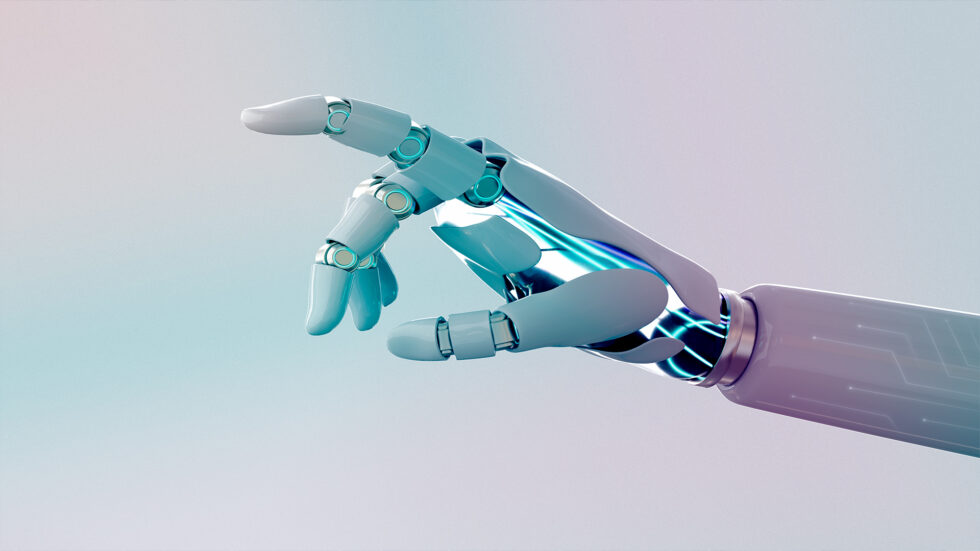
The release is a milestone for embodied AI — AI that gives robots the ability to perceive the world, understand instructions, and act in it. A vision-language-action model (VLA) combines three abilities: vision, to see the world; language, to understand instructions in natural language; and action, to control a robot's movements.
What Gemini Robotics 2.5 Is
Traditional robots are programmed step by step: a human engineer writes code telling the robot exactly how to move, where to grip, and in what order. A VLA model works differently. It takes in camera images and a natural-language instruction — for example, pick up the red box and put it in the bin — and figures out how to carry out the task.
That approach is more flexible. A traditional robot program breaks when the world changes: if the box moves, if the lighting changes, if a new object appears. A VLA model, trained on large amounts of visual and language data, can adapt to those changes in a way a fixed program cannot.
DeepMind describes Gemini Robotics 2.5 as its most capable VLA model yet. Across more than 200 tasks, it beat prior baselines by 30-100% on success rate — the share of attempts in which the robot completes the task correctly. The wide range suggests gains vary by task, but the direction is clear. No further breakdown of the 200-plus tasks, the baselines used, or the test conditions was included in the sources for this article, and the figures should be reported as DeepMind's reported results, not independently verified benchmarks.
The Mercedes-Benz Factory Test
The most concrete example is a factory test at Mercedes-Benz. In that test, an Apptronik Apollo 2 humanoid robot picked and packed parts at a 96% success rate — succeeding in 96 out of 100 attempts.
That figure matters because factories are unforgiving. For a pilot or demonstration, 96% is a strong result. For full production, factories often require even higher reliability, because a 4% failure rate on a production line can mean stopped lines, damaged parts, or safety risks. But the test shows the technology is close to production-grade for at least some tasks, and it gives a concrete, real-world example rather than a laboratory demo.
The robot was the Apollo 2, a humanoid built by Apptronik — a robot with a human-like body, two arms, two legs, a torso, and a head.
The Partners: Boston Dynamics and Apptronik
Gemini Robotics 2.5 is rolling out to robotics partners including Boston Dynamics and Apptronik, which represent different parts of the robotics world. Boston Dynamics is best known for its quadruped robot Spot and its humanoid Atlas, and for robots that can move dynamically — walking, running, climbing, and balancing in complex environments. Apptronik builds humanoids designed for work alongside people, including the Apollo series, focused on practical, dexterous work: picking, packing, carrying, and manipulating objects in factories and warehouses.
By rolling the model out to both companies, DeepMind is testing its VLA model on different robot bodies and use cases. A model that works well on one robot but not another is less useful than one that generalizes across hardware. No public API is available — developers cannot sign up and use the model on their own robots today. Access is through DeepMind's partner program, a common pattern for robotics models, where safety, hardware integration, and physical testing matter more than in pure software.
Why It Matters for Founders and Investors
For founders, Gemini Robotics 2.5 signals that the robotics platform layer is consolidating around a few large AI providers. If DeepMind's model becomes the standard intelligence layer for robots, the opportunity for startups shifts to hardware, specific applications, and integration — building robots for a particular task, or software that lets a general robot model work in a specific industry. Founders should watch whether DeepMind opens broader access over time.
For investors, the Mercedes-Benz test is the number to watch. A 96% success rate on a real factory task is a concrete data point, not a laboratory benchmark. If that rate holds across more tasks and factories, humanoid robots move from research project to commercial product. The key questions are cost, reliability at scale, and safety — none answered by a single test. But the direction is clear, and the partners involved are serious industrial companies, not just research labs. Investors should watch for the moment access widens, because that is when the broader startup ecosystem will be able to build on the model.
Angeled.com connects founders with investors.
Read Next
Databricks Unveils Always-On Genie, an AI Agent That Stops Waiting to Be Asked
DeepMind Launches AlphaGenome 2, a DNA Model That Reads Genomes Cell by Cell
ElevenLabs Unveils 13 New Products and Upgrades at Its New York Summit
Google Launches Gemini Decision 1, a Model That Answers Instead of Writing
Runway Open-Sources Praxis-1, Its Robot Model That Learned by Watching Video
83% of Companies Can't Prove Their AI Spending Pays Off — the Opening for Founders