




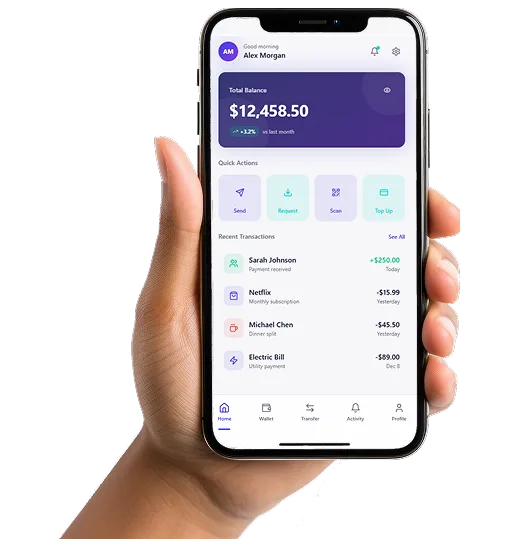
Anthropic launched Personal Finance in Claude on November 5, 2026, a new feature that lets the AI assistant read a user's financial data and answer questions about it. The feature is in beta in the United States for Pro, Max, and Ultra subscribers, and it works through Plaid, the financial data network that connects apps to bank accounts. Access is read-only: Claude can see balances and transactions, but cannot move money.
The launch is Anthropic's most direct move yet into personal finance, a category where AI assistants have long promised value but where trust, accuracy, and data access have been hard to get right.
How It Works
Personal Finance in Claude connects to a user's bank accounts through Plaid and reads balances along with up to 24 months of transaction history. Plaid is the infrastructure layer behind many consumer finance apps: when you link a bank account to an app, Plaid is often the company securely handling the connection. By building on Plaid, Anthropic avoids storing bank credentials itself and leans on an established, regulated data network.
The read-only design is the key trust decision. Claude can analyse spending, answer questions about where money went, and surface patterns across two years of history — but it cannot initiate transfers, make payments, or change anything at the bank. For users, that boundary is the difference between a helpful analyst and a risky agent. For Anthropic, it is a deliberate constraint that makes the feature easier to trust on day one.
What Two Years of Transactions Unlocks
Twenty-four months of transaction history is a meaningful window. A single month of spending shows what you bought; two years shows your patterns — seasonal spending, subscriptions you forgot, how your expenses changed after a move or a new job, and whether your savings are trending up or down. An AI assistant with that context can answer questions a simple budgeting app cannot, such as how much you actually spent on dining out last year, or which recurring charges have crept up over time.
This is the difference between a finance tool and a finance conversation. Traditional budgeting apps present charts and categories. A conversational assistant lets a user ask in plain language and get an answer grounded in their own data. The quality of the answer depends entirely on the quality of the data and the model's ability to reason about it — which is why the Plaid integration and the 24-month window matter.
The Beta Strategy
Anthropic is launching Personal Finance as a US beta for its paying tiers — Pro, Max, and Ultra subscribers. Limiting the launch to paying subscribers in one country is a familiar pattern for features that touch sensitive data: a smaller, more engaged user base, easier support, and a faster feedback loop before any wider rollout.
The tier choice also signals how Anthropic sees the feature's value. Personal Finance is not a free acquisition hook; it is a reason to pay for Claude, fitting Anthropic's broader strategy of competing on depth and trust rather than on being the cheapest or most widely distributed assistant.
The Competitive Context
Personal finance is one of the most contested categories in consumer AI. Banks, fintech startups, and the major AI labs all want to be the place where people understand and manage their money. The prize is large: financial advice and money management are services people pay for, and an assistant that truly understands a user's finances could become the default interface for a wide range of decisions, from spending to saving to investing.
What distinguishes Anthropic's approach is the combination of a frontier model with a deliberately narrow permission — read-only — and an established data partner in Plaid. Competitors have often moved faster by taking broader permissions or building their own data connections. Anthropic is betting that trust, earned through restraint, will win the category over time.
Why It Matters for Founders and Investors
For founders building in fintech, Claude's entry into personal finance is both a validation and a threat. Validation, because it confirms that conversational AI over real financial data is a major product direction. Threat, because a frontier lab with distribution can now offer a credible version of the core experience — "ask questions about your money" — for free to its subscribers.
The opportunity for startups shifts to what Claude does not do: write access and action, deep specialisation in a niche (tax, small business, investing), and integrations with the tools people already use. The most defensible fintech startups will be the ones that go deeper than a general assistant can, or that act where Claude only reads.
For investors, the launch is a reminder that the AI labs are moving up the stack into vertical applications. The question for any fintech investment is now sharper: what does this company do that a frontier model with Plaid access cannot do in its next release?
Read Next
The Finance Handoff Is Being Automated: Why Seed Capital Is Flooding Agentic B2B Payments
Bitcoin Life Insurance at $350M: Crypto's Grown-Up Financial Infrastructure Arrives
Apple Pay Finally Launches in India — Nine Years After the U.S. Debut
Samsung Partners with Solana to Bring USDC Transfers to 82 Million Galaxy Devices
Samsung Wallet Adds USDC for 82M Galaxy Devices: Stablecoins Just Went Mainstream
Fintech's Comeback: Where the Money Is Going Now