


Agile Robots, a German industrial robotics company based in Munich, has raised $500 million in funding at an $8.5 billion valuation, the company announced on November 12, 2026. The round was led by SoftBank, with Nvidia and Hitachi participating, along with T. Capital. The financing will support the company's planned expansion into the United States and additional manufacturing capacity. The round has been reported as a Series F, according to Sifted, and brings Agile Robots' total funding to approximately $2 billion.
What Agile Robots does
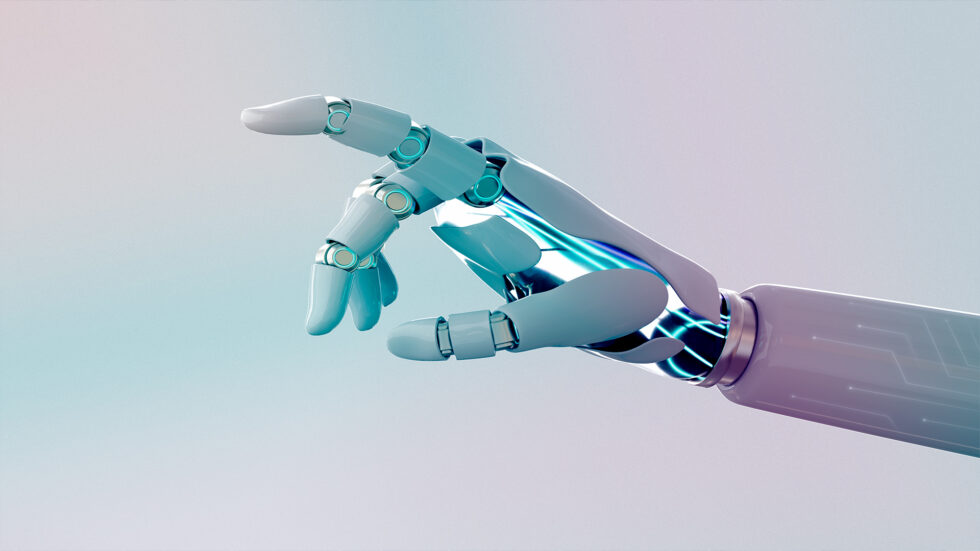
Agile Robots was founded in 2018 as a spin-off from the German Aerospace Center, Germany's national research centre for aeronautics and space. The company builds industrial automation systems that combine AI software, mechanical engineering, and robotics hardware. Its products include robotic arms, automated production cells, mobile transport systems, robotic hands, and humanoid machines designed for factories and warehouses.
The company operates in a field increasingly described as "physical AI": technology that allows machines to interpret their surroundings, make decisions, and perform tasks in the real world. Where earlier industrial robots followed rigid, pre-programmed routines, physical AI aims to give machines the perception and adaptability to handle variation — a different part on the line, an unexpected obstacle, a task that changes from one shift to the next.
Manufacturing scale
Agile Robots has invested heavily in manufacturing infrastructure. Earlier in 2026, it opened a production facility in Fürstenfeldbruck, near Munich, designed to manufacture up to 10,000 legged and wheeled humanoid robots annually. That figure represents production capacity, not confirmed customer orders or actual annual output — an important distinction. Building the factory is one challenge; filling it with paying customers is another.
The new capital will be used to expand the company's US operations, increase manufacturing capacity in Germany, and enter new markets, supporting its international growth and industrial AI robotics production.
Why Nvidia and SoftBank are involved
Nvidia's participation is particularly significant. The chipmaker is investing in robotics as AI models become increasingly capable of handling perception, movement, and physical interaction. Nvidia supplies the computing platforms that many robotics companies build on, and its investment in Agile Robots aligns its hardware with a leading European robotics manufacturer. For Agile Robots, Nvidia's backing brings not only capital but technical credibility in the AI ecosystem.
SoftBank's participation reinforces its longstanding interest in robotics and automation, a theme that runs through its investment history. Hitachi brings an industrial perspective to the financing: as a major manufacturer and industrial conglomerate, it understands the factory floor as a customer, not just as a concept.
The challenge ahead
For Agile Robots, the next challenge is turning technological capability into commercially viable deployments. Industrial buyers need systems that can operate reliably for long periods, integrate with existing equipment, and generate measurable productivity gains. A robot that works impressively in a demonstration but fails on a production line at 3 a.m. is a liability, not an asset.
This is the central tension in industrial robotics. The technology is advancing rapidly, but the buying cycle is slow and conservative. Factories run on equipment expected to last a decade or more, and managers are rightly cautious about unproven systems. Agile Robots must prove that its machines can deliver uptime, safety, and return on investment in real production environments — and do so at a price that makes sense against human labour and conventional automation.
What this means for founders and investors
For founders, Agile Robots demonstrates that investors are backing robotics companies that can connect AI research with manufacturing capacity and real industrial applications. The lesson is that a robotics startup cannot be a research project alone: it needs production, service, and a credible path to deployment in customer facilities. Founders in this space should expect capital intensity — factories, inventory, and support networks cost money long before revenue arrives.
For investors, the $8.5 billion valuation reflects a bet that physical AI will follow a similar trajectory to the software AI boom, but in the physical world. The opportunity is enormous — manufacturing, logistics, and warehousing are among the largest markets on earth. The risk is that adoption is slower and more expensive than the software analogue, and that valuations set on the promise of humanoid robots may take years to be justified by sales.
Angeled.com connects founders with investors.
Read Next
LangChain Raises $300 Million Led by CapitalG at a $3 Billion Valuation to Build the Agent Stack
Mount Thor Raises $45 Million to Run Cloud Fleets of Macs for AI Agents
OpenAI Reportedly Raises $15 Billion at a $1.25 Trillion Valuation
Q-CTRL Raises $290 Million Series C Led by Salesforce Ventures, Reaching Unicorn Status
SE3 Raises $30 Million Series A Led by Accel
UFORCE Raises $700 Million Series A at a $6 Billion Valuation for Autonomous Defense Systems